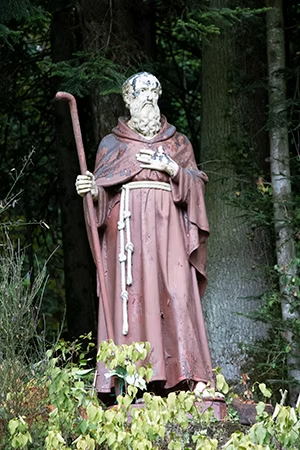
Saint Peregrin Hermitage
There is a farm in the woods of Poinson called Saint-Pérégrin. It was a famous hermitage, the origin of which is not known.
Ecclesiastical history mentions a saint named Peregrine, first bishop of Auxerre, sent to Gaul by Pope Sixtus II, around the year 258.
It is not probable that the hermitage dates back to this time, but we were able to dedicate it to this saint. Here is what has been said about the formation of this establishment.
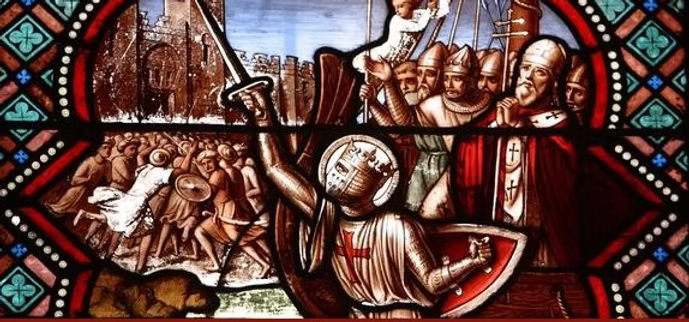
Folklore (250-1230)
Crusades and Romance - Lord of Pressigny
In 1198, Pope Innocent II called for another crusade, and in November 1199 a group of French knights took crusade vows. Among them was the young lord of Pressigny. They left for the Holy Land in 1002.
Doomed from the beginning, the crusade party is diverted to Zara and Constantinople, finally ending in Acre. In a fight against the infidels, the lord of Pressigny was wounded and counted among the dead.
After 10 years, in 1012, the lord's wife was declared a widow and contracted to remarry. It is unknown where the lord's time was spent, but in 1016, the lord returned and learned that his death had been declared some years earlier. He then resolved to embrace the religious life. He built a cabin in the middle of the forest, lived there as a hermit, and was called because of his virtues sanclus peregrinus, the holy traveler, the holy foreigner, or Saint-Peregrine. When he was about to die, he called the Lord and the Lady of Pressigny, told them who he was, and made them promise to maintain a hermitage in this place in perpetuity.
Some say that this story is purely imaginary; others claim that this is the tradition. Be that as it may, in the church of Genevrières there are relics of Saint Peregrin which appear to be authentic.
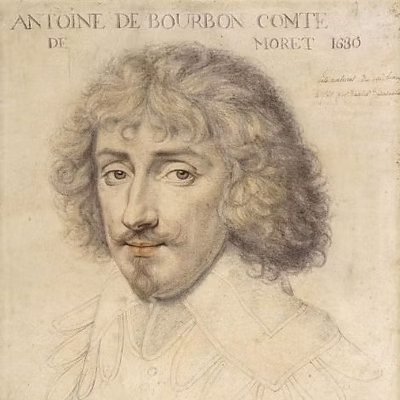
Antoine de Bourbon
Count of Moret
Jean-Jacques, otherwise known as Antoine, was the natural son of Henri IV and Jacqueline de Breuil, Countess of Moret[1].
He was born at the castle of Moret on May 9, 1607. Legitimized "of France"by letters patent given in the course of January 1608, he spent the first days of his life at the "nursery" of Saint-Germain-en-Laye where the Marquise de Montglat was responsible for supervising the education of the king's children, legitimate or not. The Dauphin, future Louis XIII, did not appreciate the presence of the bastards of his royal father. It seems that Antoine, six years his junior, was particularly affected by this animosity. He spent a large part of his childhood in Pau, where the king his father, had him driven "in order to preserve the affection of the Béarnais by entrusting them with a prince of his blood that he hoped they would consider as another himself. - even ”(Father Grandet“ Life of an unknown solitary ”(1699)).
There is no portrait of Antoine as a child but we know from that "of all the children of Henri IV, the Comte de Moret was the one who most resembled him" [2]
As an adult, Louis XIII did not show a grudge against his half-brother and enrolled Antoine in the college of Bourbon with the aim of having him then enter into orders. In this spirit, he also endowed it with several rich abbeys ( Saint Etienne de Caen, Savigny d'Avranches, Signy en Champagne, Saint Victor de Marseille, Saint-Benoît-sur-Loire and others). Appointed commendatory abbot of Saint-Étienne de Caen in 1620, he benefited from the rich income of the Norman abbey. During the 12 years, he was at the head of the abbey, he constantly came into conflict with the religious who reproached him for not releasing the funds necessary for their personal needs and for the reconstruction of buildings, ruined by the religious war.
The religious vocation was not however to Antoine's taste. who profited a lot from the easy life of the court. A time in love with Madame de Chevreuse, lady companion and confidant of Queen Anne of Austria, Antoine made a lot of talk about him by the tumultuous nature of his sentimental life. It is, it seems, as far as Venice that his reputation as a seducer spread!
Beginning military training in 1621, he also defended a thesis in philosophy in January 1625. If the king wanted to make him a man of the church, Antoine had nothing that is necessary to wear the ecclesiastical habit with dignity.
“Handsome, well made, ambitious, greedy for glory, holding onto his father, he only dreamed of adventure. "[3] He had a tall stature, a majestic air, a cheerful face, keen and shining eyes, noble manners, and a lot of wit. He knew four languages: French, Latin, Spanish, and Italian. He had studied and possessed very well philosophy, geography, and history. He knew perfectly well the secret of fortifications, the art of besieging cities, and the way of arranging armies in battle.
The adventure, fatal for Antoine, is presented in the guise of Gaston d'Orléans, also his half-brother, brother of Louis XIII. Antoine, perhaps influenced by his father-in-law, the Marquis de Vardes, indeed sided with Gaston d'Orléans against the king and conspired against Richelieu whom he wanted to exclude from his ministry.
On August 12, 1631, like all supporters of “Monsieur” (Gaston d'Orléans), Antoine was declared a lèse-majesté criminal. His goods confiscated, he went into exile in Belgium with his mother, Jacqueline de Bueil, and Vardes, his stepfather. But, very quickly, Antoine leaves Brussels, rejoins the Duke of Montmorency in France, and with an army assembled by the Duke of Orleans, advances towards Languedoc where await two royal armies commanded by Marshals de La Force and Schomberg. Antoine de Bueil advances towards Castelnaudary in the company of the Duke of Montmorency, governor of Languedoc. They are accompanied by 2,000 footmen and 3,000 horsemen. The meeting with the royal armies takes place at the gates of the city on September 1, 1632.
The combat is in fact only a simple skirmish of the avant-garde, a sort of duel between the leaders of the two parties who have gone too far. without securing their rear. Injured, Montmorency is overturned under his horse while Antoine, burning to show himself as a hero, receives a pistol shot from the captain of arms Bitran which goes through his stomach. The main body of the rebel army, faced with the fall of its leaders, abandons the battlefield without having really engaged. Turning around, Gaston d'Orléans thinks only of making peace with Richelieu.
We have seen how Montmorency, transported, and tried in Toulouse, was beheaded for example. It was on September 1, 1632, under the walls of Castelnaudary, where Montmorency was defeated and taken prisoner. Antoine de Bueil-Bourbon's official existence ends on the evening of the battle of Castelnaudary.
Historians are in fact divided on whether or not Antoine was killed on this occasion. Despite the decision of the Toulouse parliament of September 14, 1632, mentioning his death, his body was never found.
For some, Antoine would have died a few hours after the battle, in the carriage of Gaston d'Orléans who transported him to the Convent of Prouilles.
For others, he would have been treated in this convent before disappearing. A valuable argument plays in favor of this version: the abbess of Prouilles, Madame de Ventadour, was after this affair stripped of her abbey by order of Richelieu, officially for having taken in the Count de Moret, probably for having protected his flight.
Going into hiding, Antoine de Bueil would then have started, as much for security as for real conviction, that he resolved to leave the military state and the world a religious life.
Death of the Count of Moret
Jean-Jacques, otherwise known as Antoine, was the natural son of Henri IV and Jacqueline de Breuil, Countess of Moret[4].
Appointed commendatory abbot of Saint-Étienne de Caen in 1620, he benefited from the rich income of the Norman abbey. During the 12 years he was at the head of the abbey, he constantly came into conflict with the religious who reproached him for not releasing the funds necessary for their personal needs and for the reconstruction of buildings, ruined by the religious war.
During the 1680s, a hermit from Anjou was identified as the Count of Moret, who would have survived Castelnaudary and would have hidden for several years abroad eventually leaving the world and becoming a hermit. The mystery remains around the end of the Comte de Moret. For history, he died at 25 from a musket shot, the1 st September 1632, at the battle of Castelnaudary. Some later novels made the Comte de Moret the father of Louis XIV. Faced with the alleged impotence of Louis XIII, a court cabal would have favored a meeting between Anne of Austria and Moret as a result of which the queen would have become pregnant. These romantic theories have no historical basis.
During his youth, he was close to his half-brother, Gaston de France , Duke of Orleans . He participated in particular in the rebellion led by him and the Duke of Montmorency , Henri II de Montmorency , against King Louis XIII , whose outcome was the Battle of Castelnaudary . Wounded during the battle by a musket shot to the shoulder, he died three hours later in a Gaston coach, as a result of this injury. His body was never found, however.
Death at Castelnaudary
The adventure, fatal for Antoine, is presented in the guise of Gaston d'Orléans, also his half-brother, brother of Louis XIII. Antoine, perhaps influenced by his father-in-law, the Marquis de Vardes, indeed sided with Gaston d'Orléans against the king and conspired against Richelieu whom he wanted to exclude from his ministry.
On August 12, 1631, like all supporters of “Monsieur” (Gaston d'Orléans), Antoine was declared a lèse-majesté criminal. His goods confiscated, he went into exile in Belgium with his mother, Jacqueline de Bueil, and Vardes, his stepfather. But, very quickly, Antoine leaves Brussels, rejoins the Duke of Montmorency in France, and with an army assembled by the Duke of Orleans, advances towards Languedoc where await two royal armies commanded by Marshals de La Force and Schomberg.
Antoine de Bueil advances towards Castelnaudary in the company of the Duke of Montmorency, governor of Languedoc. They are accompanied by 2,000 footmen and 3,000 horsemen. The meeting with the royal armies takes place at the gates of the city on September 1, 1632.
The combat is in fact only a simple skirmish of the avant-garde, a sort of duel between the leaders of the two parties who have gone too far without securing their rear. Injured, Montmorency is overturned under his horse while Antoine, burning to show himself as a hero, receives a pistol shot from the captain of arms Bitran which goes through his stomach. The main body of the rebel army, faced with the fall of its leaders, abandons the battlefield without having really engaged. Turning around, Gaston d'Orléans thinks only of making peace with Richelieu.
We have seen how Montmorency, transported, and tried in Toulouse, was beheaded for example. It was on September 1, 1632, under the walls of Castelnaudary, where Montmorency was defeated and taken prisoner. Antoine de Bueil-Bourbon's official existence ends on the evening of the battle of Castelnaudary.
Historians are in fact divided on whether or not Antoine was killed on this occasion. Despite the decision of the Toulouse parliament of September 14, 1632, mentioning his death, his body was never found.
For some, Antoine would have died a few hours after the battle, in the carriage of Gaston d'Orléans who transported him to the Convent of Prouilles.
For others, he would have been treated in this convent before disappearing. A valuable argument plays in favor of this version: the abbess of Prouilles, Madame de Ventadour, was after this affair stripped of her abbey by order of Richelieu, officially for having taken in the Count de Moret, probably for having protected his flight.
Going into hiding, Antoine de Bueil would then have started, as much for security as for real conviction, that he resolved to leave the military state and the world a religious life.
The Red Sphinx
In 1844, Alexandre Dumas published The Three Musketeers. Later, toward the end of his career, Dumas wrote The Red Sphinx, a direct sequel that begins a mere twenty days afterward. It introduces a charming new hero, the Comte de Moret, a real historical figure from the period. Dumas wrote seventy-five chapters of The Red Sphinx, but never quite finished it.
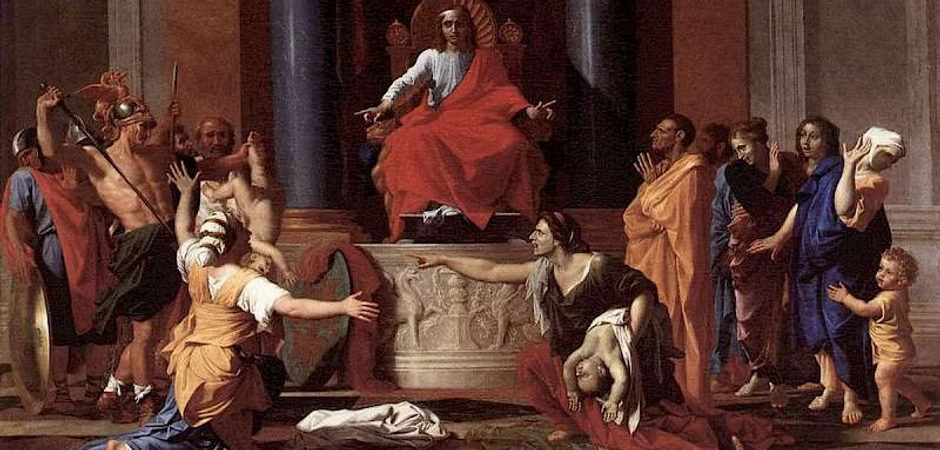
Jean-Jacques (Baptiste)
Hermitages of Langres
Saint-Pérégrin was one of the main hermitages of the diocese of Langres, France. In letters dated 1670, a solitary monk chose the hermitage of Saint-Pérégrin in the parish of Poinson as the place of his retreat.
The unknown solitary
A solitary monk chose the hermitage of Saint-Pérégrin in the parish of Poinson as the place of his retreat. Jean-Jacques chose the hermitage of Saint-Pérégrin in the parish of Poinson as the place of his retreat, and M. Gontier, the grand vicar of Langres, put it in possession by letters dated 1670.
In 1632 he entered the Institute of Hermits of the Congregation of Saint John the Baptist and spent 20 years working through positions from novice to visor. After being appointed general visor of hermits, he traveled extensively between 1654 to 1676. His constant movement alludes to some unwelcome notoriety, most likely a result of his pious fame.
Upon settlement in Saint Peregrin, Jean-Jacques, built and worked with a growing group of novices. In 1673, he was elected general visitor of all the hermits of the diocese, in a synod. He then processed to establish guidelines and policies for all hermitages within the Langres dioceses for the next 3 years.
Brother Jean-Jacques left the diocese of Langres in May 1676, and retired to Anjou. There, he built the hermitage of Gardelles, on the grounds of the abbey of Asnières, in the parish of Coudray-Macouard,[4] diocese of Angers, where stayed until his death on December 24, 1691.
Hermits of St. John the Baptist
Life of an Unknown Solitary
In 1632 he entered the Institute of Hermits of the Congregation of Saint John the Baptist. He spent 20 years at Sainte Bodille, in Dauphiné, where, from novice, he became master.
After being appointed general visitor to the hermits of several dioceses (Lyon, Vienne, Le Puy-en-Velay), he traveled a lot from 1654 to 1676. These multiple movements can be explained by the fact that, in the crowds attracted by the holy man he has become, there is always someone who believes they recognize in him the Count of Moret who died at the battle of Castelnaudary. Refusing to answer questions about his origins, “Brother Jean-Baptiste” then preferred to leave the premises.
After having seriously examined the way of life of all religious orders, he embraced that of the hermits of Saint John the Baptist[4], who most closely resembled the first solitaries of the nascent church.
After receiving the religious habit and the name of Jean-Jacques, he successively remained in various hermitages in the dioceses of Vienne, Le Puy, Geneva, Lyon, went to visit the holy shroud in Turin, went to Italy, read the pilgrimage to Rome and Loreto, and then retired to a forest a few leagues from Venice. From there he returned to Lorraine to occupy the hermitage of Martemont, diocese of Toul, which was vacant.[5] The war having obliged him to leave it, he took refuge in the hermitage of Doulevant-ie-Clllt-Teau[6], whose garden was from the diocese of Langres, and the house from that of Toul.
Hardly had he spent six months there, when he saw his home besieged by a crowd of patients of both sexes, infected with leprosy and scabies, who came to drink and wash at the nearby fountain, whose mineral waters were esteemed very beneficial. This concourse of the people disturbed the solitude of our religion; he decided to give up this post to chapel guards[7].
He moved to the hermitage of Saint-Quinefort in the diocese of Reims, where he fell ill. M. Gontier, vicar general of Mgr. the Bishop of Langres[8], sent two solitary people to him to urge him to come to Burgundy, in order to form a novitiate, there capable of filling the eighty hermitages of the diocese with holy men. Brother Jean-Jacques accepted the invitation.
He had to choose between these many retreats, but he preferred to create a new one. He settled around the year 1664 in a cave in the forest of Oisilly, near Mirebeau, where he practiced great austerity. The rumor of such an extraordinary life soon spread, and several young people came to line up under the leadership of this holy old man. He received in a short time thirteen novices who all persevered in their vocation.
But the honors paid to his virtues alarmed his humility. To live in solitude and be unknown to the world, he made up his mind to go to Spain. He set out towards the end of 1669, and reached the kingdom of Valence, resolved to spend the rest of his days there. Circumstances did not allow him to settle there. Not long before, a Frenchman had killed a Spanish grandee, and all the French had become so odious to the Spaniards that they could not suffer any on their land.
Jean-Jacques, therefore, returned to the diocese of Langres. This time he chose the hermitage of Saint-Pérégrin in the parish of Poinson as the place of his retreat, and M. Gontier, the grand vicar, put it in possession by letters dated 1670.
Before laying the spiritual foundations of his hermitage, he built the material edifice. He repaired with his own hands all the old buildings that were falling apart and raised new ones. He separated the apartment of the hermits from that of the novices by a large courtyard; for several young people came under his direction. He did not allow them any relations with the world.
When someone asked to see them, he replied: “You want to see our brothers, but our brothers do not want to see you; you want to talk to them, but they won't answer you; they are dead, they are dumb; I cut off their tongue and both feet; I only left them both arms to work." Women and girls were expressly forbidden to enter the hermitage, under any pretext whatsoever.
When a few young men presented themselves to him to be received at the novitiate, he asked them five things, namely:
1. if they had not been brought to justice, and if there was not against them a decree of body grip;
2. if they were not enrolled in the armies of the king or deserters;
3. if they were not married, or if, being widowers, they had no children who needed them to earn their living;
4. if they were not loaded with debts, because in this case, he obligated them to stay in the world to pay them;
5. finally, if they did not have some incurable or contagious diseases.
When they had answered these five questions, if he saw fit to admit them, he would wait a month or two before giving them the habit. During this time he was inquiring into the truth of what they had told him.
As for the qualities of the body, he required that those who presented themselves should be young, robust, of a strong constitution, accustomed to work and not subject to disease.
For the qualities of the soul, he wanted them to have a solid, cheerful, open mind, full of candor, simple and free of inconstancy and lightness, that they love retirement and silence.
He never asked a postulant if he had money. “All the treasure that we ask of you,” he said, “is the treasure of the Gospel which is hidden in the bottom of your heart, that is to say, a great desire for your perfection; serve God well, and you will not miss anything.”
If someone represented to him that he had nothing to give, provided he had the required qualities, he would say to him, kissing him: “You, welcome, my dear brother; if you have nothing, we have nothing either; we will get along well together.”
If someone wanted to give something on entering, he would accept it saying: “It is for you and not for me that I am taking this money, my dear brother; we will employ him to build you a cell and to buy you a suit and books.”
In four or five years, he received more than sixty novices, among whom were the Macarius brothers, Arsene and Dorothée, who remained with him for a long time.
They were all dressed in a dress reaching down to the heels and a leather belt from which was suspended a chapelet. Their hood was square, pointed, and the scapular of the same length as the robe was tied over it with a mantle reaching down to the knees. The whole was of naturally brown wool. They went barefoot with sandals, and only wore hats when traveling.
But several vagrants, dressed in much the same way, knowing the great esteem that the world had for the hermits of Saint-Pérégrin, roamed the villages of the Diocese and made quests under their name, in order to obtain by there no more wheat and money. As they then led a very scandalous life, they caused a strange confusion to Brother Jean-Jacques.
Here is an example: M. le Marquis d'Allcre, Lord of Laferté, had repeatedly heard M. Amyot, parish priest of Bussières and man of great merit, say all sorts of good things about our solitary man, and on his story, he really wanted to know him. One day, a so-called hermit counterfeited so well the air and the manners of the Father, by going to collect the marquis, that he made him believe that it was him so that he received a great deal of honesty from it, and a large alms. This wretch, delighted to have succeeded in his hypocrisy, went to stay in a cabaret in the village of Laferté, where he spent the best part of his quest on drinking for two or three days. By chance, a servant of the Marquis came one evening to ask for something at the inn. There she met the hermit full of wine and was greatly scandalized. She went to tell this adventure to her master, who, outraged with vexation at having been thus caught, promptly went to the inn to chastise this insolent; but he had already fled. The next day, the Marquis reproached the parish priest and told him that another time he would not believe so easily in the saints he canonized; that little by little had he had mistreated his hermit with a stick: then he told her the story. You would have made me great pleasure to beat him, replied Mr. Amyot; I am sure that Brother Jean-Jacques would not have felt it.
The latter having learned of this insignia of deceit, was penetrated with grief. He immediately went to find the marquis to disillusion him and said to him as he approached him: “I have heard, Monsieur, that a belitre[9] has taken my name and my coat to surprise you; I come to show you my face and to show you that I have never been in your parish.”
The Marquis, having recognized the imposture of the false hermit, was soon convinced of the virtue of the true. After a few moments of conversation, he tried in vain to keep him home. When he was gone, he had three loads of wheat brought to his hermitage.
Several facts of this nature determined Jean-Jacques to change the color of his coat. Monsignor de Simiane de Gordes, Bishop of Langres, considered this reform so necessary, that he ordered all the hermits of his diocese to take white after the example of the religious of the desert of Saint Sabine. Its ordinance made in Varennes, September 16, 1687, was put into execution in Saint-Pérégrin a few years before being published.
The way in which the Father gave the habit to his novices was simple but edifying. When the day assigned for the clothing had arrived, he had the postulant ask for the habit on his knees, then he would recite the Veni Creator with the brothers. Then he would take the crucifix, give it to him to kiss, and putting on the tunic, he said to him: "I give you, my brother, this habit, with the authority of Monsignor our Bishop, but remember that it will be left to you only as long as you will be faithful to the practice of the rules of the solitary life."
After dressing him, he kissed her and changed her world name to that of some holy anchorite.
"In giving you a new name," he said, "I do not take away from you that of your baptism, you must always have a great devotion to the saint whom the Church has given you as patron; you will take this one as the other's coadjutor, so that both together may lead you in the perfect ways of the Christian life." After that, he cut her hair; it was a mark of the jurisdiction he had over him. He did not want his religious to make vows that were neither simple nor solemn. If on the day he had taken for a novice's clothing, there was some stranger in the hermitage, he postponed the ceremony until the next day; he never allowed outsiders to attend.
His maxim was that one must not begin the hermit life by trading with people of the world; that nothing is so capable of distracting a young man who renounces the century as the sight of seculars; that we must move away from the occasions of speaking to creatures, when the creator grants us the grace to lead us, according to his promise, in solitude to speak to our heart.
In this small community, the time was distributed with admirable precision. All the exercises of the day were fixed by regulations which were observed with the greatest exactitude.
The monks got up in winter at four o'clock, and in summer at daybreak; Jean-Jacques said that it would be shameful for a hermit if the sun had risen before him. Immediately afterward, they would go together in their chapel, do the vocal and mental prayer which lasted five quarters of an hour, then they would recite the office of the Blessed Virgin, and hear mass if they had a priest to say it to them. That done, they went to work. At ten o'clock, we had lunch together, during which we were reading some good books. After this meal, there was a quarter of an hour of recreation in the garden was to be interrupted from an hour to an hour and a half by reading the life of the saint of the day or another book of piety. At half-past four they were reciting Vespers and Compline. At five o'clock they were still doing half an hour of meditation. At half-past five, supper or snack, reading and recreation as in the morning. After that, Brother Jean-Jacques gave a conference, sometimes on Christian truths, sometimes on the maxims of the anchorite saints. In these familiar conversations, he made his novices speak, asked their feelings, and made them repeat what he had said. At eight o'clock, they said the rosary, made the examination of conscience, the evening prayer, and the reading of the subject of the meditation for the next day. Then everyone retired in silence to their cell to be in bed at nine o'clock at the latest.
In addition to the conferences that Brother Jean-Jacques gave to his novices every day as a form of recreation, he gave a more serious and longer one every Friday. He ordinarily spoke of the obligation of hermits to imitate the lives of lonely saints. And, as he possessed almost all the books which related to this subject and that he had an admirable memory, he recounted the most beautiful features of them in a manner so vivid and so touching that he made a great impression on the heart of his brothers.
In Saint-Pérégrin, people were not satisfied with the fasts prescribed by the Church. We still fasted every Friday, Advent, the eve of all the feasts of Our Lord, Our Lady, the Apostles, and several anchorites, such as Saint Anthony, Saint Paul, Saint Hilarion, and Saint Pachomius.
Brother Jean-Jacques particularly honored the latter, and, in his imitation, he always wanted to be the porter of the house; he did not give this charge to anyone. In his capacity, he wanted to know who was entering his hermitage and who was leaving it. He applied himself with all his power to occupy those under his direction. He made them learn trades, which did not disturb the rest and the peace of solitude. His monks made stockings, caps, woolen caps, estame, straps, covers, baskets, and wicker baskets, which were very delicately worked[10], images of the Blessed Virgin, crucifixes, etc.
Every Thursday a brother went to sell some of these books at the Fayl-Billot market, from where he brought back to the hermitage the necessary provisions for the week; they gave the others to people who visited them. They hardly went out except to go to the parish to hear mass, feasts, and Sundays.
“By giving you the habit,” said the Father to his novices, “I cut your hair; but I did not cut off your arms. We must no longer have a will of our own. You have to work: I don't want lazy people." When one of them had left a tool in the garden or outside the workroom when he was ready to sit down at the table, he would say to him: "I found such and such a tool in the garden: he is alone, go and keep him company, you will have dinner tomorrow and you will have supper this evening." The brother had to remain in the place where he had left this tool until the Father told him to leave it. “We are poor,” he added; "our tools must, my brothers, be put away, lest they spoil, or that we waste time looking for them."
He usually only collected once a year and with the express permission of Mgr. the Bishop. This quest, which lasted eight days, was done only in the surrounding parishes; he did not go more than three leagues from Saint-Peregrine, so as not to harm the hermits in the neighborhood and not to be obliged to go to bed. When he went to collect it was as much to give alms to the poor as to ask for it from the rich; for when villagers told him that they had nothing to give him: “Certainly,” he replied, “since you cannot give anything, you, therefore, need to receive." And at the same time he drew money for them from his pocket and wheat from his bag. The poor ran after him as if he were a great lord.
But Jean-Jacques was not satisfied with giving alms for the nourishment of bodies; he still exercised his charity towards souls. He was going to teach children in parishes, with the authorization of M. Javernaut, grand vicar. He taught his religious how to do catechism well, and did it himself in their presence. Brother Arsène was one of those who benefited the most from his lessons. He knew neither Greek nor Latin: but he retained in his memory and reproduced with rare talent the instructions composed by the Father. "If he were the first to die," he said pleasantly, "I would remain silent, and I would be ignorant; because all my science is in his head."
The conduct of our recluse acquired him so much esteem and gave such a high idea of his virtues, that he was elected general visitor of all the hermits of the diocese, in a synod which they held in 1673. Monsignor the Bishop confirmed his election on August 14 of the same year. Obedience made him accept this charge. He went to visit the hermitages every year, stayed two or three days in each one to instruct the brothers, hear their complaints, corrects the abuses. He had several of them put on the white habit, and brought back among them diligence at work, the love of prayer, retirement, and silence. In a word, he made a practice in all its points the admirable regulations that Monsignor Simiane de Gordes published in 1688 for the hermits of his diocese.
However, the rumor spread that brother Jean-Jacques was the count of Moret, the son of Henri IV[11]. So he asked for permission to leave Saint-Pérégrin, on the pretext that the Franche-Comté war, which was desolating the country, was disturbing his solitude.
After making several representations, he received the following letter from the Bishopric:
"Jean-Baptiste Javernaut, priest, canon and archdeacon in the cathedral church of Langres, vicar-general of the illustrious Louis-Marie-Armand of Simiane de Gordes[12], by the grace of God and of the Apostolic Holy See, bishop duke de Langres, peer of France. To our very dear brother in Our Lord, Jean-Jacques residing in this diocese, in the solitude of Saint Pérégrin, parish of Poinson, greetings. On what has been explained to us by you, that after having lived in this diocese for several years, in the habit and in the profession of heremitic life, and to have dressed and raised there several brothers under the authority and the good pleasure of my lord and his predecessor, you now wanted to retire to another diocese to live there still in a greater retreat, we have granted to you, says Brother Jean-Jacques,
Done at Langres on April 22, 1676 under the seal of my lord.
Signed: JAVERNAUT."
Brother Jean-Jacques, therefore, left the diocese of Langres in May 1676 and retired to Anjou. There, he built the hermitage of Gardelles, on the grounds of the abbey of Asnières, in the parish of Coudray-Macouard[13], Diocese of Angers.
He spent fifteen years there in the practice of all the virtues of the ancient anchorites and in the austerities of penance. Finally, he returned his soul to God on Christmas Eve, December 24, 1691, and his body was buried in the small chapel of the hermitage, in the midst of a great crowd of people, who venerated him as a saint. When the news of his death reached Langres, Mr. Carteron, vicar-general of Mgr. the Bishop and superior of the hermits of the diocese, ordered that the customary prayers for the deceased be made in all the hermitages.
Buried in the chapel he had built, his body was transferred in September 1738 to the choir of the church of Coudray-Macouard, where it still stands, with episcopal authorization. Eight years after his death, Father Grandet, a priest in Angers, wrote a biography of Antoine de Bueil, Brother Jean-Baptiste, trying to clarify the mystery of this double identity.
There are quite a few arguments in favor of authenticity. We will only retain the most convincing: in addition to the disappearance of the body which, in the case of the king's son, seems totally incomprehensible, it should be noted that Jean-Baptiste, of the same age as the Comte de Moret, said to have been brought up in the castle of Pau and to have taken part in the battle of Castelnaudary. Very similar to King Henry, he was once formally recognized by a lord of the court. Without ever denying being the Count of Moret, he nevertheless always refused to admit it… (“Racan and the Three Musketeers”, pages 19, 20 and 21)
Modern Farm (1699-2021)
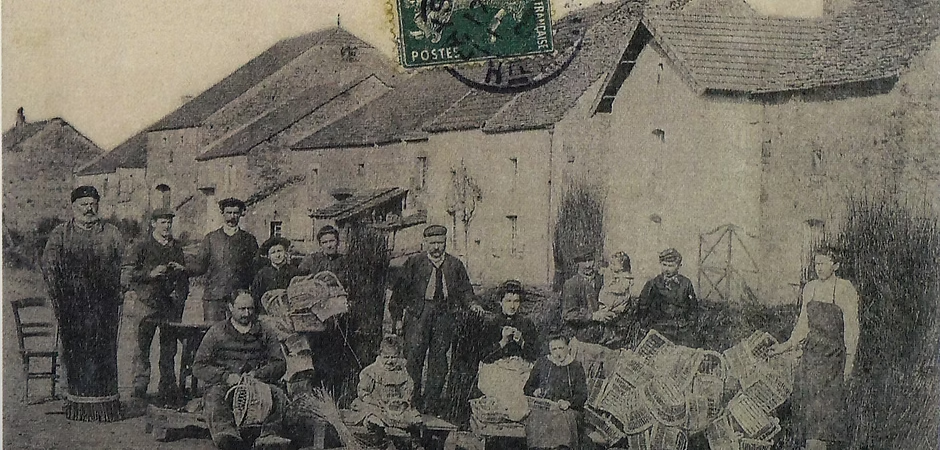
Agricultural and Wicker
The legacy of the monks' handiwork carried on into the modern era. The farm property evolved over the centuries, maintaining its connection to the land and local crafts, particularly wicker weaving, which remains a testament to the enduring influence of the hermits who once called Saint-Peregrin home.
[1] https://gw.geneanet.org/cyprienpl?lang=en&iz=5479&p=jacqueline+comtesse+de+moret+sur+loing&n=de+bueil
[2] G. Lioret (see bibliography) page 62
[3] G. Lioret, page 129
[4] This congregation was established around the year 1630 by Brother Michel de Sainte-Sabine. He was a very pious and austere priest who, having received from God a very particular zeal for the solitary life, undertook to bring the hermits of his time back to the perfection of the anchorites of old. After much travel and work, he published a constitution in twenty-two articles and gave his reform the name of Saint John the Baptist who first inhabited the deserts.
[5] HE, lr: ¡\ N -JACQUES, Superior of the Hermits of S'-Peregrm (16 70-1676].
[6] Chief town of the canton of the department of Haute-Marne.
[7] The wars so frequent than often forced loners to leave their retreats. The hermitages remained uninhabited and their furniture exposed to looting. Then the poor asked the bishops for permission to settle there so as not to have to pay rent. It was also a means of keeping the furniture of the religious and preventing the ruin of their houses. They got it easily, on condition that when hermits returned they would give way to them.
[8] M. Gontier, son of a councilor in the Parliament of Burgundy, was a pious and very zealous priest. His house served as a seminary in Dijon to prepare young ecclesiastics for holy orders.
[9] From the German Bettler, beggar, beggar. Here this word is taken in the sense of rascal.
[10] The factory of which Fayl-Billot is the center does not seem to date back beyond this period. We find basket makers in 1688 for the first time. There is reason to believe that it was the hermits of Brother Jean-Jacques who taught the inhabitants to cultivate and use the obier.
[11] https://fr.wikipedia.org/wiki/Antoine_de_Bourbon-Bueil
[12] Louis-Marie-Armand de Simiane de Gordes, abbot of Roë, of Saint-Vincent de Senlis, canon-count of Lyon, first chaplain of Marie-Thérèse, was the 96th bishop of Langres. He had been appointed in 1671; crowned at Saint-Germain en Laye on November 2 of the same year, he took possession of his seat by public prosecutor first, then the following year in person.
[13] https://en.wikipedia.org/wiki/Hermits_of_St._John_the_Baptist